A white jade pendant can look ivory in one photograph and cool gray in another. Before judging the shade, read the label. Hetian jade is a Chinese name used for tremolite-rich nephrite. The name comes from Hetian, also spelled Hotan, in Xinjiang. On a modern identification report, it tells you about the material. A specific mining origin calls for separate evidence. Xinjiang market regulator’s consumer guide.
What is Hetian jade?
China’s GB/T 38821-2020 standard uses the English name Hetian Yu and describes it as a natural mineral aggregate composed chiefly of tremolite. In English jewelry descriptions, Hetian nephrite jade gives readers both the familiar trade name and the gem material. Jadeite is a separate jade material, so when a listing simply says jade, ask which material the piece contains. National standard for Hetian Yu.
Does Hetian jade come from Hotan?
Hotan is historically associated with prized white nephrite. Chinese material naming also covers qualifying nephrite from other regions. If a seller describes a pendant as Xinjiang Hetian jade or Hotan-origin nephrite, ask for the basis of the geographic claim. A report that lists the material as Hetian Yu can be read as an identification of the stone. Evidence for the mining location depends on what the accompanying documents actually say. Xinjiang guidance on jade names and origin.
White, blue-white and green Hetian jade
Color descriptions help you narrow down a style. Use front, side and back photos under similar lighting, especially when comparing pieces of different thickness. The color ranges below follow the descriptions in China’s Hetian Yu standard. GB/T 38821-2020 color classifications.
| Color name | Typical appearance | What to compare |
|---|---|---|
| White jade (bai yu) | Predominantly white, sometimes with a slight undertone | Compare the face and edges in the same light. Note whether you prefer a warmer or cooler white. |
| Blue-white jade (qingbai yu) | Pale blue-green or gray-green tones between white and qing jade | Check how the tint changes at thinner carved edges. |
| Green nephrite (bi yu) | Light green to deep green, including gray-green tones | Look for any visible inclusions and how the carving uses the surrounding color. |
You may also see mutton-fat jade, a name historically associated with prized white nephrite. If the label affects the price, ask which qualities the seller uses to justify it. Examine fine texture, polish and color under diffuse light. Beijing heritage journal on white jade and carving.
How to read a Hetian jade certificate
- Ask for an identification report for the jade piece you are buying. Check that its photograph and any listed dimensions or weight match the piece.
- Read the material and remarks. Look for nephrite or Hetian Yu in the identification, and check what the report says about color or treatment. Ask the seller for clarification if the scope is unclear.
- Verify the jade identification report with the issuing lab. Use the number on the report for the exact jade piece. If NGTC issued it, use NGTC’s official verification service. Ask for separate documentation for any claim about the mine or region. NGTC report verification guidance.
What to look for in a carving
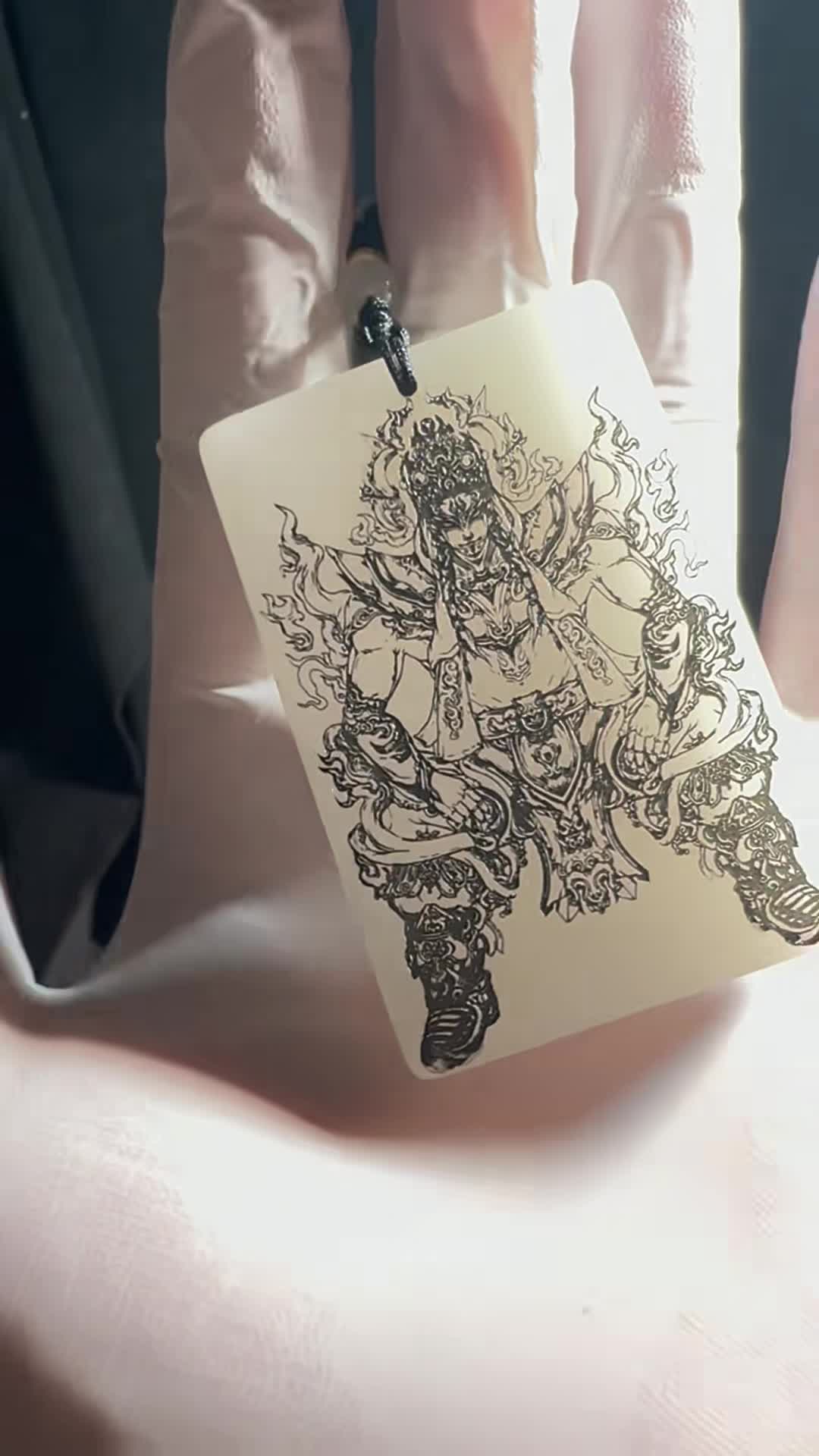
Turn the piece until light crosses the surface. On a pendant, a side view shows the relief, the thickness at the loop and the finish near the cord hole. Compare the front with the back to see whether the finish is intentional on both sides. For more examples of form and detail, read our guide to handmade Chinese jade jewelry.
Common questions about Hetian jade
Is white jade always Hetian jade?
White describes a color. For a confident purchase, ask the seller for the material identification on the exact piece, especially if the listing uses only a color name.
How should I care for a jade pendant?
Wipe the pendant with a clean, soft cloth. Follow the care instructions for the cord and any fittings. Store the pendant separately so it stays clear of harder jewelry and metal edges.